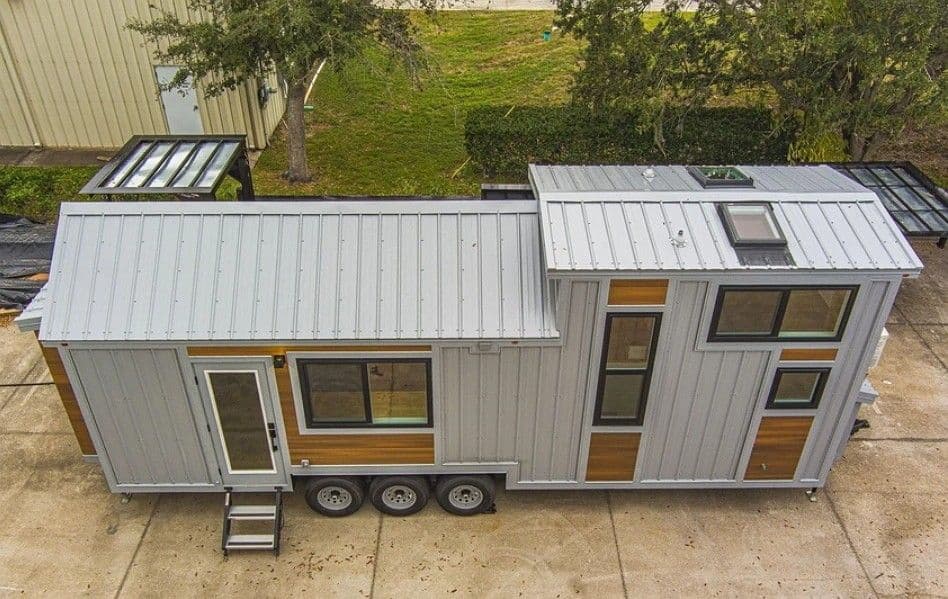
$36,830
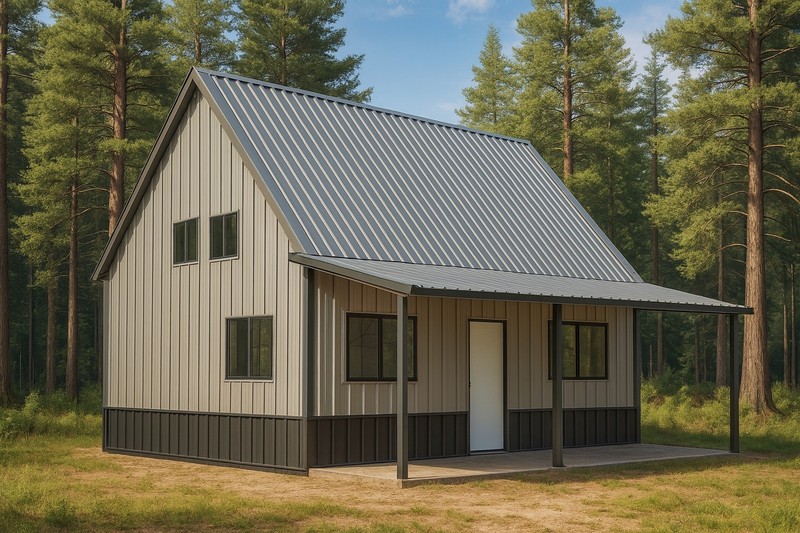
U.S. Made Fire Resistant 26 X 34 Cabin, Barndominium or Steel Home Kit
Sacramento, CA · 1 bed · 1 bath


Please Request a Free Quote to Confirm Current Pricing!!!
Made IN The U.S. Granny Flat Shell Kit Overall 18’ wide x 15' deep 270 sq ft + 6’ x 18’ front porch
*we can modify window and door openings as needed
FREQUENTLY ASKED QUESTIONS
STEPS TO ORDERING A STEEL ECO-KIT
Simple Instructional Guide for Our Steel Building Kit Customers
This guide explains the basic steps for ordering a Steel Eco-Kit, including the planning department review, preliminary or architectural plans, engineered plans, permit approval, and final kit order.
STEP 1 - REACH OUT TO YOUR LOCAL PLANNING DEPARTMENT
Request a thumbs up to build an engineered steel building, such as a home, cabin, shop, garage, ADU, or barndominium, of the required size and height on your property.
While speaking with your planning department, request the following information:
· Roof or ground snow load requirements, or both if required
· Frost depth requirements for the foundation
· Required wind speed rating for your location
STEP 2 - REQUEST A FREE PROJECT CONSULT
The design team will work with you to create the initial design for your steel building kit. This includes the roof design, length, width, height, and the approximate locations and sizes of desired openings.
Your designer will provide a price quote within approximately 24 hours. The quote may include the price of the building kit, engineered plans for the building and foundation, and the cost to ship the building to your location.
STEP 3 - ORDER PRELIMINARY OR ARCHITECTURAL PLANS
Before ordering engineered plans, it is recommended that you sit down with your local planning department to review your project and confirm requirements.
STEP 3 OPTIONS
Option 1 - Non-Residential Buildings with Floor Plans
For non-residential buildings such as shops, garages, warehouses, storage buildings, or other projects that only require a simple floor plan layout for areas such as a bathroom, washroom, or office, a full architectural plan set may not be required.
Preliminary Plan Review Packet: $597
This packet may be used for planning discussions and initial review before moving into engineered plans.
Option 2 - Residential Buildings - Full Plan Sets Required
Residential projects such as barndominiums, cabins, homes, and accessory dwelling units typically require a complete architectural plan set. This may include the floor plan, electrical, plumbing, mechanical, and other details required by the local planning department.
Architectural Plans upfront investment: $2,997
Credit toward building kit purchase: $2,000
Net cost for architectural plans after credit: $997
For comparison, many architectural or drafting firms may charge approximately $3,500 to $7,000 for a similar level of service.
COST SUMMARY
|
Item |
Cost / Deposit |
Notes |
|
Preliminary Plan Review Packet |
$597 |
Often used for non-residential planning discussions and initial review. |
|
Architectural Plans |
$2,997 upfront investment |
For residential projects requiring a full architectural plan set. |
|
Building Kit Purchase Credit |
$2,000 credit |
Credited back toward the building kit purchase when moving forward. |
|
Net Architectural Plan Cost |
$997 net cost after credit |
Net cost after the $2,000 building kit purchase credit. |
|
Typical Outside Architectural / Drafting Firm Cost |
$3,500 - $7,000 |
Shown for comparison to similar plan services. |
|
Engineered Plans Deposit |
25% - 30% deposit |
Required before engineered plans are started. |
Note: Final building kit pricing is confirmed through the quote and final payment contract process. Pricing may depend on building size, design, openings, engineering requirements, shipping location, and factory scheduling.
ARCHITECTURAL PLAN PROCESS OVERVIEW
After ordering the architectural plan set, the team works with you and the architect to design a customized floor plan for your residential steel building kit. This may apply to a barndominium, cabin, home, or accessory dwelling unit.
After the floor plan has been completed to your specifications, a preliminary document package can be prepared for your local planning department meeting.
Your preliminary document package may include:
· Floor plan
· Preliminary building and foundation plan
· Rendering of your residential steel building kit
The goal of the planning department meeting is to receive preliminary approval and leave with a clear list of requirements needed to move forward with the building permit application.
Key items to discuss may include setbacks, licensed trade requirements, stamping requirements, and specific plan details such as wall schedules, breaker box locations, stair details, insulation specifications, and other local requirements.
STEP 4 - ORDER ENGINEERED PLANS
Engineers are available in all 50 states.
Engineered plans require a 25% - 30% deposit.
Once the deposit is received, the team works closely with the architect to generate the final architectural plans and make any necessary adjustments to window and door placement. This helps ensure the building can be engineered smoothly.
The engineering team then produces a stamped and signed set of plans for both the Steel Eco-Kit and the foundation.
Digitally stamped and signed plans are typically provided within approximately five to seven business days. Hard copies of the signed plans may also be mailed.
STEP 5 - SUBMIT PLANS FOR PERMIT APPROVAL
Once you have obtained the engineered building plans and architectural plan set, submit the documents to your local planning department and building team for permit review.
Your contractor, electrician, plumber, HVAC installer, insulation contractor, concrete contractor, and other trades may also review the plans during this stage.
STEP 6 - ORDER YOUR STEEL ECO-KIT
Once you have received your permit from the planning department, you are ready to order your Steel Eco-Kit.
A final payment contract will be generated for your building order. Your Steel Eco-Kit goes into production once the final payment has been received.
Estimated kit delivery timeline: 4 - 8 weeks
WHAT DO I GET WITH EVERY STEEL FRAMED NUECO BUILDING KIT?
All of Our Kits Include
Engineered Framing System-Our metal building kits include complete structural engineering. This engineering will include the foundation slab, piers, and any other requirements for your steel building design.No Load Bearing Interior Walls-This rigid frame design is engineered to eliminate the need interior load bearing walls. This allows you maximum flexibility to arrange your steel framed kit anyway you like.
Strong Lightweight Galvanized Steel-Our heavy duty all galvanized steel framing system is lightweight, mold resistant, hurricane resistant, fire resistant, & easy to insulate. Bolts together, NO WELDING.
Door/Window Frames-All openings are pre-engineered & cut to sizes easily found at your local home improvement store. Thus, saving you tons of time & money.
Everything to Assemble-We included everything you will need to assemble your kit Including all structural bolts. braces, painted screws, and sealants for assembly.
The Complete Package-We include everything to enclose the exterior shell & roof. Wall framing, roof framing, and all exterior metal for both the roof and exterior. (Standard Metal Exterior = 26 gauge classic Rib wall panels, 26 gauge Vertical seam PBR roofing with MS Colorfast45® thermo-set paint composed of blended polyester& silicone resins. 45 year warranty!)
* EXCEPT the actual windows and doors
Engineered Local Wind Loads- Can be engineered for wind loads in excess of 180 mph.
Property Owner Is Responsible for The Following On-Site Construction Items:
WHY CHOOSE STEEL CONSTRUCTION OVER WOOD?
Steel buildings provide numerous benefits compared to traditional wooden structures:
Durability: Steel is highly resistant to decay, mold, and infestations that typically harm wood. Consequently, steel structures generally enjoy a longer lifespan than their wooden counterparts.
Strength: Steel’s superior strength allows for the creation of larger spaces without the need for supporting columns or load-bearing walls, offering more flexibility in design and the possibility for more spacious interiors.
Fire Resistance: Unlike wood, which is highly flammable, steel does not burn, making steel buildings much safer and more resistant to fire damage.
Minimal Maintenance: Compared to wood, steel buildings require less upkeep. They remain stable through changes in temperature and humidity, avoiding warping, shrinking, or expanding, and thus necessitating fewer repairs and replacements.
Faster Construction: Steel components can be manufactured in advance and quickly assembled on-site, shortening the construction timeline relative to wood-based methods. This efficiency can lead to cost reductions and quicker availability of the completed structure.
Environmental Impact: Steel is recyclable, which renders it a more eco-friendly option than wood. Steel structures can also be engineered for enhanced energy efficiency through features like insulated panels and reflective roofs, minimizing energy use throughout their life.
Long-Term Cost Savings: Although the initial costs for steel buildings might be higher, their durability and low maintenance needs can lead to substantial savings over time. Furthermore, the inherent fire resistance and sturdiness of steel often result in lower insurance costs.
Design Flexibility: The robustness and adaptability of steel support diverse architectural styles and structural layouts, making it suitable for everything from industrial facilities to contemporary office spaces.
In summary, steel buildings outshine wooden structures in durability, strength, safety, and environmental sustainability, making them the preferred option for a variety of commercial, industrial, and residential projects.
WHAT'S THE DIFFERENCE BETWEEN A COLD FORMED BUILDING AND A RIGID FRAME BUILDING?
Cold-Formed C-Channel vs. Rigid Frame Steel Buildings
When choosing the right steel building system, it helps to understand the strengths of each option. Cold-formed C-channel buildings are the preferred choice for most residential, Barndominium, cabin, ADU, and shop applications, while rigid frame buildings are better suited for large commercial and industrial projects, especially where endwall spans exceed 60 feet.
Cold-Formed C-Channel Steel Buildings (Ideal for Residential & Shops)
Best For: Barndominiums, cabins, ADUs, garages, workshops, storage buildings, small commercial spaces, flex-space buildings, and most projects where the endwall width is under 60 feet.
Cost-Effective & Efficient:
Cold-formed C-channel structures use high-strength, lightweight C-shaped steel
members. This results in lower overall material cost, reduced installation
labor, and easier handling on the jobsite.
Perfect for Residential Applications:
C-channel buildings excel in homes, barndominiums, cabins, and shops because
they allow for clean interior layouts and easy integration of HVAC, plumbing,
and interior walls.
Lightweight & Easy to Install:
The components are lighter than rigid frame beams, making transport and
construction easier—especially in rural or hard-to-access locations.
Versatile for Small to Mid-Size
Buildings:
C-channel steel offers excellent flexibility for typical residential widths,
garage/shop layouts, and accessory structures.
Fast Assembly:
These kits can usually be erected quickly with minimal heavy equipment, keeping
construction timelines efficient.
Common Applications:
Rigid Frame Steel Buildings (Best for Large Commercial & Industrial)
Best For: Large industrial, commercial, and agricultural projects—especially when endwall spans exceed 60 feet.
Strength for Wide Clear Spans:
Rigid frame buildings use heavy steel I-beams that allow for extremely wide
open interiors without interior support columns—ideal for aircraft hangars,
warehouses, and other large facilities.
Designed for Large-Scale Needs:
These buildings support tall heights, heavy loads, and complex architectural or
mechanical requirements typical of commercial or industrial operations.
Durable & Long-Lasting:
Rigid frame structures are engineered for high-demand environments and achieve
exceptional longevity with minimal maintenance.
Prefabricated & Efficient:
Although heavier than cold-formed systems, rigid frame buildings are
prefabricated and can be erected efficiently with the appropriate equipment.
Common Applications:
HOW DIFFICULT IS IT ERECT ONE OF OUR STEEL BUILDING KITS?
One
of the primary benefits of using steel for construction is the simplicity of
assembly. Once the design phase concludes, the pre-engineered steel building
system is produced in modular sections and components that are easy to put
together. This modularity significantly speeds up the assembly process and
simplifies it compared to traditional building methods. Upon delivery of your
prefabricated steel building, the only steps required are to connect the
various parts and raise the structure using basic scaffolding or a scissors
lift—no specialized tools needed. Additionally, we can connect you with a
reputable Erecting Team to ensure the construction process is as smooth and
efficient as possible.
Prefabrication: Our steel building components are crafted off-site and arrive at your construction site ready to be assembled. This set includes precisely cut and fabricated columns, beams, purlins, and other essential structural elements tailored to exact specifications.
Precision Engineering: Utilizing computer-aided design (CAD) and meticulous engineering, we ensure that each component fits seamlessly with the others, minimizing the need for adjustments during on-site assembly.
Bolted Connections: Our steel structures predominantly use bolts instead of welding, enhancing both assembly speed and flexibility. Bolted connections make it possible to assemble quickly without on-site welding and also allow for easy disassembly if changes are necessary.
Ease of Adjustment: The use of bolts instead of permanent welds offers adjustability during the assembly process, accommodating any site-specific variations that might arise.
Lightweight Components: Steel components are notably lighter than traditional construction materials such as concrete or masonry. This lightweight nature simplifies handling and placement, particularly with cranes or other lifting equipment.
Modularity and Standardization: Our steel buildings are designed with modularity in mind, facilitating the construction of standardized sections and enabling efficient component replication.
Standardized Components: Employing standardized parts not only expedites the assembly process but also helps workers quickly become proficient with the consistent designs and specifications.
Reduced Construction Time: The prefabrication and straightforward assembly process of steel buildings significantly cut down construction times compared to traditional methods.
Weather Independence: The assembly of steel structures is less affected by adverse weather conditions, which helps in keeping the project timeline on track and potentially hastening completion.
HOW CUSTOMIZABLE ARE OUR STEEL BUILDING KITS?
Steel buildings are exceptionally versatile, providing extensive customization options to align with specific needs and aesthetic preferences. Steel’s adaptability as a construction material enables variations in size, shape, layout, and design elements. Our design team collaborates with you to ensure that your doors and windows are perfectly integrated while upholding structural integrity.
Size and Dimensions: Steel structures can be tailored for various applications, from compact garages and storage sheds to expansive industrial facilities and aircraft hangars.
Design and Architecture: The architectural design of a steel building is fully customizable. Options include different roof styles, wall panels, and decorative details such as doors, windows, and facades to meet unique aesthetic and functional requirements.
Interior Layout: The internal configuration of a steel building can be designed to suit its intended use, benefiting from the ability to create large, open spaces free of columns, which offers versatility in the layout of offices, production areas, or storage spaces.
Roof Styles: A variety of roof styles are available for steel buildings, including gable and hip roofs, among more intricate designs, influencing both the look and functionality of the building.
Color and Finishes: Components like wall panels, roofing, and trims can be finished in a range of colors, allowing for customization to align with corporate branding, environmental blending, or specific visual styles.
Insulation Options: Based on climate needs and energy efficiency objectives, insulation choices can be tailored. Various insulating materials can be incorporated into the walls and roofs to help control temperature and lower energy costs.
Doors and Windows: Steel buildings can feature a diverse array of door and window types and sizes, with customizable placement and design to optimize natural lighting and ventilation according to the building’s purpose.
Foundation Options: The foundation of a steel building can be adapted to meet the specific site conditions and structural requirements, with options ranging from monolithic and concrete slabs to pier foundations.
Modular Construction: Modular construction techniques are often employed in steel buildings, facilitating straightforward expansions or modifications. This approach allows for the easy addition of sections or components as needs evolve.
WHAT ARE THE MOST COMMON SIZES FOR STEEL BUILDINGS?
Metal buildings are renowned for their versatility and adaptability across a wide range of applications. They can be customized to meet your specific size requirements, no matter the scale. Your steel structure can span hundreds of feet in width and depth, with the capability to extend up to forty feet in height. The design of these buildings allows for the addition of mainframe components and beams to increase length or width as needed. Additionally, you can customize the roof pitch and end wall designs, including options for overhead awnings or extended roofing. Each building is tailor-made to perfectly suit your requirements.
Here are the average dimensions for various steel building applications within the community:
Small to Medium-Sized Buildings:
Standard Warehouse or Industrial Buildings:
Agricultural Buildings (e.g., Barns):
Commercial Retail Buildings:
Aircraft Hangars:
Sports Facilities (Indoor Sports Arenas):
Office Buildings:
Auto Repair Shops / Garages:
Residential Garages / Storage Sheds:
Residential Barndominiums
Residential Cabins
ARE STEEL BUILDINGS VERY COST EFFICIENT?
Each steel building—whether a Barndominium, shop, cabin, or another structure—is tailored to unique specifications, and costs vary based on location and intended use. Compliance with state (registered engineering in all 50 states) and local requirements also influences the total expense. Building code inspections typically proceed smoothly, as most inspectors recognize the reliability of a prefab steel building that has received state-level approval.
Our clients consistently express high satisfaction with the cost-effectiveness and swift delivery of our steel buildings. The enthusiasm for steel building homes is growing daily, recognized as a remarkably affordable construction option.
The final price of your steel building may fluctuate based on several factors, including geographic location, intended use, and specific structural load requirements like wind and snow, to meet local and state codes. Additional costs may also arise from optional features or add-ons. We recommend contacting one of our building specialists to finalize the cost of your new steel building.
Here are some reasons why steel buildings are considered highly cost-effective:
Construction
Speed:
Steel buildings are constructed more quickly than traditional buildings due to
the use of prefabricated components and modular techniques. This speeds up
project completion, reduces labor costs, and shortens the overall construction
timeline.
Material
Costs:
Steel is economically advantageous due to its high strength-to-weight ratio,
durability, and availability. Bulk purchases of pre-engineered components can
further reduce costs.
Design
Flexibility:
Steel’s flexibility supports open design concepts, which reduces the need for
internal support columns, often leading to a more efficient use of space and
material savings.
Durability
and Low Maintenance:
Known for their durability, steel buildings resist various environmental
threats such as termites, rot, and mold. Their low maintenance needs help avoid
frequent repairs and replacements, enhancing long-term cost savings.
Energy
Efficiency:
Well-insulated steel buildings are energy efficient, saving costs on heating
and cooling. Steel structures easily incorporate insulation and reflective
roofing, improving the building’s energy performance.
Sustainability:
Steel is highly recyclable, and many steel buildings include recycled
materials. The eco-friendly attributes of steel can enhance cost-efficiency,
particularly as environmental considerations gain importance in construction.
Long
Lifespan:
Steel buildings generally last longer than other construction materials,
reducing lifecycle costs through fewer replacements and renovations.
Insurance
Costs:
Insurance premiums for steel buildings tend to be lower than for other
materials, due to steel’s resistance to fire, pests, and environmental hazards.
Resilience
to Extreme Conditions:
Designed to endure severe weather, steel buildings are ideal in regions prone
to hurricanes, earthquakes, or heavy snow, enhancing their long-term value and
cost-effectiveness.
Prefabrication
and Modular Construction:
Prefabricating steel components off-site and using modular construction
techniques minimize on-site labor, reduce waste, and improve overall
construction efficiency, leading to significant cost savings.
ARE STEEL BUILDINGS MORE ENERGY EFFICIENT THAN A TRADITIONALLY WOOD BUILT STRUCTURE?
Steel buildings are notably energy-efficient, both in terms of their manufacturing process and their operational heating and cooling efficiency. Remarkably, 98% of the steel used daily is recycled, underscoring its sustainability.
Compared to other materials, steel structures are inherently superior in energy efficiency, which can be attributed to various factors such as design, insulation, and the quality of construction. Steel buildings offer significant benefits including thermal efficiency, flexible design for incorporating energy-saving features, durability, and the capacity to support solar panel installations. Achieving optimal energy efficiency with steel buildings involves meticulous design and insulation, along with compliance with building codes and energy standards. Here are some key advantages of energy-efficient steel buildings:
Thermal Performance:
Precision Engineering:
Design Flexibility:
Durability and Longevity:
Recyclability:
Prefabrication:
CAN SOLAR PANELS BE INSTALLED ON OUR STEEL BUILDINGS?
Please note: Installation of solar panels should be performed by a licensed electrician. Easy-Up Steel Structures does not provide solar panel installation services. The following information is for general purposes only and may not be applicable to your specific solar system.
Installation
Process:
Most solar panel companies offer specialized brackets that can be easily
mounted onto the structure of the building. The solar panels then attach
seamlessly to these brackets. Please consult your solar panel contractor for
detailed installation procedures.
Structural
Assessment:
Prior to solar panel installation, perform a structural assessment to ensure
the steel building can accommodate the weight of the solar panels and
associated equipment. A structural engineer should be consulted to evaluate the
load-bearing capacity.
Roof
Inspection:
Examine the roof to assess its condition and readiness for solar panels. Look
for potential damage or areas requiring repair to ensure the roof is suitable
for installation.
Orientation
and Tilt:
Establish the most effective orientation and tilt for the solar panels based on
your building’s geographical location and solar exposure. Typically, panels
should face south or southwest in the Northern Hemisphere and north or
northwest in the Southern Hemisphere.
Shading
Analysis:
Perform a shading analysis to detect any potential obstructions like nearby
buildings or trees that might cast shadows on the panels. Reducing shade is
essential for optimal energy production.
Permitting
and Regulations:
Secure the necessary permits and adhere to local building codes and
regulations. This process might include submitting solar installation plans to
local authorities for approval.
Design
and Layout:
Collaborate with a solar energy system designer to plan an efficient
arrangement for the solar panels, considering factors like panel orientation,
spacing, and electrical connections. Ensure that the design is compatible with
the steel roof structure.
Mounting
System:
Select a suitable mounting system for the solar panels. Options include
ballasted, penetrating, or hybrid systems, depending on the roof type, load
capacity, and local environmental conditions.
Roof
Preparation:
Prepare the roof by cleaning it and clearing any debris. Conduct necessary
repairs to ensure the roof is ready for the mounting system.
Solar
Panel Installation:
Follow the design specifications to install the mounting system. Securely
attach the solar panels to the mounts and handle all electrical wiring and
connections according to industry standards.
Inverter
Installation:
Set up inverters to convert the direct current (DC) from the solar panels into
alternating current (AC) usable in the building or for returning power to the
grid.
Electrical
Wiring:
Connect the solar panels to the inverter, ensuring all wiring is correct and
adheres to safety standards, including grounding.
Monitoring
System:
Implement a monitoring system to track solar panel performance. This helps in
detecting any operational issues and optimizing energy output.
Commissioning:
Conduct thorough testing of the entire solar energy system to confirm proper
function. This step might require collaboration with a qualified technician or
electrician to check electrical connections and overall system performance.
Maintenance
Plan:
Develop a regular maintenance schedule to maintain efficiency and extend the
lifespan of the solar panels. This may include periodic inspections and
cleaning.
Grid
Connection (if applicable):
If you plan to feed excess energy back into the grid, coordinate with your
local utility company to connect the solar energy system to the power grid.
IS IT HARD TO INSULATE A STEEL BUILDING?
Insulating your steel building is crucial for maintaining a comfortable indoor environment in all weather conditions. Consider insulation for every part of the building, from the roof to the floor, during the design process.
Wall Insulation: Steel frames conduct heat, making it essential to insulate between the steel studs or framing members to interrupt this thermal bridge.
Roof Insulation: An insulated roof is vital for keeping a stable and comfortable interior climate, particularly helpful in preventing heat loss when warm air rises during cold winter months.
Floor Insulation: For steel buildings, insulating the floor is important, especially if the design includes a concrete slab. This helps in preventing heat loss to the ground and enhances comfort within the building.
Air Sealing: Effective air sealing complements insulation by preventing drafts and reducing energy loss. Use caulk or expanding foam to seal any gaps, cracks, and openings.
Vapor Barrier: Incorporating a vapor barrier is crucial for managing moisture in a steel building. Place the vapor barrier on the insulation’s warm side to prevent condensation from forming within walls or ceilings.
Soundproofing: Besides thermal insulation, consider acoustic insulation for its soundproofing properties if noise reduction is a priority. This can be applied in walls and ceilings to minimize sound transmission.
HOW DO I VENTALATE A STEEL BUILDING?
Ventilation is vital in a steel building to ensure a comfortable and healthy indoor environment. Effective ventilation regulates temperature, humidity, and air quality, which is essential for both occupant well-being and the structural integrity of the building. Consider the following approaches to ventilation in a steel building:
Natural Ventilation:
Mechanical Ventilation:
WHAT ARE MY CHOICES FOR COLOR OPTIONS?
We offer an extensive array of color options for your walls, roof and trim, providing numerous combinations to achieve the perfect look for your steel building. We use only top-quality paints, incorporating advanced silicone protected polyester technology currently available on the market. Our Energy Star Approved paint not only enhances aesthetics but also acts as a thermal barrier. It reflects up to seventy percent of the sun’s rays, helping to keep the building cooler and preventing energy loss.
WHAT OPTIONS DO I HAVE WHEN DESIGNING MY INTERIOR?
The interior of your steel building features a clear span design, offering one hundred percent usable space. Climate control is effortlessly managed with insulated panels and integrated climate control systems for temperature regulation. Additionally, your steel building is fully customizable, allowing it to be tailored to meet any specific requirements you have for the interior layout and design.
WHAT TYPE OF FOUNDATION CAN I PUT MY STEEL BUILDING ON?
You have the option to set your steel building on a slab foundation, a pier foundation, or select “foundation by others” if you prefer to place your building over a basement.
WHY DO PRICES DIFFER BASED ON LOCATION?
Prices vary based on your location, influenced by differing state and county building regulations. Building codes dictate specifications like snow loads, wind speeds, and frost depth, which in turn determine the necessary sizes and materials for building components.
For example, a building in Arizona might need 8″ frames to suit its mild winter conditions, whereas a building in the mountains of Colorado would require more robust framing materials to withstand the severe winter conditions and heavier snow loads.
WHAT ARE MY FINANCING OPTIONS?
Our team brings years of expertise in both construction and lending.
We are committed to making your purchase of a steel building as seamless and stress-free as possible. Regardless of your financial circumstances, we aim to help you afford the steel building you’ve always wanted at a price that fits your budget.
You would be able to see if you qualify with our lending partners through the link provided:
Alabama Cabin Kit
Arizona Cabin Kit
Arkansas Cabin Kit
California Cabin Kit
Colorado Cabin Kit
Connecticut Cabin Kit
Delaware Cabin Kit
Florida Cabin Kit
Georgia Cabin Kit
Idaho Cabin Kit
Illinois Cabin Kit
Indiana Cabin Kit
Iowa Cabin Kit
Kansas Cabin Kit
Kentucky Cabin Kit
Louisiana Cabin Kit
Maine Cabin Kit
Maryland Cabin Kit
Massachusetts Cabin Kit
Michigan Cabin Kit
Minnesota Cabin Kit
Mississippi Cabin Kit
Missouri Cabin Kit
Montana Cabin Kit
Nebraska Cabin Kit
Nevada Cabin Kit
New Hampshire Cabin Kit
New Jersey Cabin Kit
New Mexico Cabin Kit
New York Cabin Kit
North Carolina Cabin Kit
North Dakota Cabin Kit
Ohio Cabin Kit
Oklahoma Cabin Kit
Oregon Cabin Kit
Pennsylvania Cabin Kit
Rhode Island Cabin Kit
South Carolina Cabin Kit
South Dakota Cabin Kit
Tennessee Cabin Kit
Texas Cabin Kit
Utah Cabin Kit
Vermont Cabin Kit
Virginia Cabin Kit
Washington Cabin Kit
West Virginia Cabin Kit
Wisconsin Cabin Kit
Wyoming
Cabin Kit
Alabama Barndominium Kit
Arizona Barndominium Kit
Arkansas Barndominium Kit
California Barndominium Kit
Colorado Barndominium Kit
Connecticut Barndominium Kit
Delaware Barndominium Kit
Florida Barndominium Kit
Georgia Barndominium Kit
Idaho Barndominium Kit
Illinois Barndominium Kit
Indiana Barndominium Kit
Iowa Barndominium Kit
Kansas Barndominium Kit
Kentucky Barndominium Kit
Louisiana Barndominium Kit
Maine Barndominium Kit
Maryland Barndominium Kit
Massachusetts Barndominium Kit
Michigan Barndominium Kit
Minnesota Barndominium Kit
Mississippi Barndominium Kit
Missouri Barndominium Kit
Montana Barndominium Kit
Nebraska Barndominium Kit
Nevada Barndominium Kit
New Hampshire Barndominium Kit
New Jersey Barndominium Kit
New Mexico Barndominium Kit
New York Barndominium Kit
North Carolina Barndominium Kit
North Dakota Barndominium Kit
Ohio Barndominium Kit
Oklahoma Barndominium Kit
Oregon Barndominium Kit
Pennsylvania Barndominium Kit
Rhode Island Barndominium Kit
South Carolina Barndominium Kit
South Dakota Barndominium Kit
Tennessee Barndominium Kit
Texas Barndominium Kit
Utah Barndominium Kit
Vermont Barndominium Kit
Virginia Barndominium Kit
Washington Barndominium Kit
West Virginia Barndominium Kit
Wisconsin Barndominium Kit
Wyoming Barndominium Kit
Delivery available
Shipping from $0.00 - Contact seller for details
| Date | Price | Change |
|---|---|---|
| Jul 18, 2022 | $19,171 | Listed |
More tiny houses in California
Compare local builders if you'd rather custom-build — open a profile for contact details, models, and reviews.

California · 3 models · 2-4 months
California Built Tiny Homes for Sale

California · 7 models · 12 weeks
High-end. Not high-cost

California · 11 models · 6-7 months
Crafting luxury tiny homes designed just for you
California
California's Leading Tiny House Builder
Selling a tiny house? It's free to list with no commission. List your tiny house