Tiny House Rental Income Potential
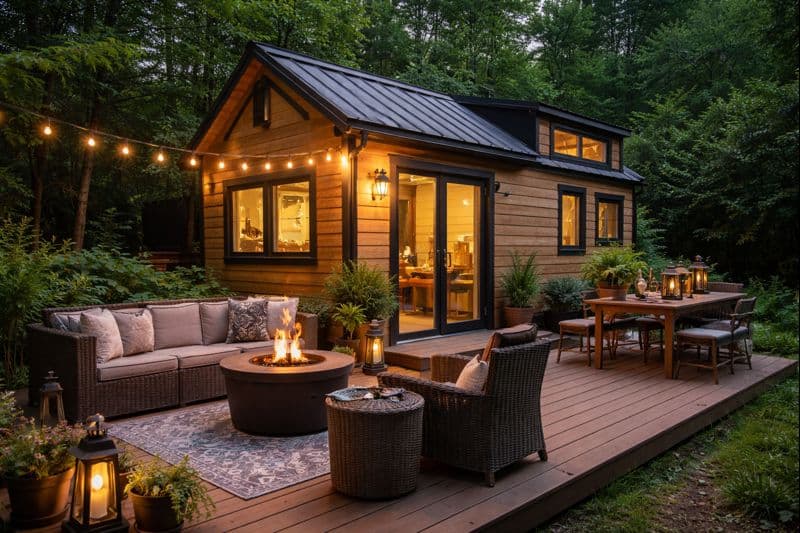
Why Tiny House Rentals Can Work
Tiny homes are one of the best "small footprint" rental products in the market because travelers and renters do not just want a place to sleep. They want a story, a vibe, and a memorable stay.
But rental income is not automatic.
Tiny house rental profitability depends on:
- •Where it is located
- •What type of tiny home it is (wheels vs foundation vs ADU)
- •What it costs to operate
- •How well it is marketed
- •What rules apply (zoning + permits + STR restrictions)
This page will help you estimate realistic income ranges and avoid the mistakes that kill returns. Deciding between rental and selling? See our guide on whether to sell or rent your tiny house.
Run Your Numbers
Use our calculators to estimate real income, expenses, and break-even before committing.
Quick Answer: How Much Can a Tiny House Rental Make?
Most tiny home rentals fall into one of these lanes:
Long-Term Rental (Monthly)
$800 to $2,500+ per month
Short-Term Rental (Nightly)
$70 to $250+ per night
Reality Check
Tiny homes can gross a lot, but net profit depends on fixed costs, cleaning, platform fees, and vacancy. Do not confuse revenue with profit.
Step 1: Your Rental Type Changes Everything
| Type | Pros | Cons |
|---|---|---|
| Tiny House on Wheels (THOW) | Flexible placement, can chase demand | Can depreciate, financing/insurance tricky, legality varies |
| Tiny House on Foundation | Feels more like real estate, better stability | Permitting costs/time, needs proper hookups |
| Tiny House as ADU | Often cleanest path to predictable income | ROI depends on local ADU rules and build costs |
Check your local zoning laws. This is what decides if your plan is real or just a dream.
Step 2: The 5 Factors That Drive Tiny House Rental Income
1. Location (The Biggest Lever)
- •Tourist demand = higher nightly rates
- •City access = stronger long-term rent
- •Remote locations can win if the experience is strong (views, privacy, nature)
2. Design + Photos (Your Booking Engine)
Tiny homes win when they look:
- •Cozy and intentional
- •Bright (natural light)
- •Clean and uncluttered
- •"Instagrammable" without being gimmicky
Learn how to write a listing that sells to maximize your booking rate.
3. Amenities That Increase Your Rate
High-impact features in tiny rentals:
Hot Tub / Soaking Tub: Where feasible, major draw
Fire Pit + Seating: Outdoor experience upgrade
Private Deck / Outdoor Dining: Extends usable space
Strong Wi-Fi: Essential for remote workers
Mini-Split HVAC: Enables year-round occupancy
4. Seasonality + Events
Your income can swing hard if you are in:
- •Ski towns
- •Lake towns
- •Festival/event markets
Plan Ahead
Plan for slow months. Many rentals have 2 to 4 months of lower occupancy that can hurt annual returns.
5. Reviews + Guest Experience
A tiny house with great reviews can out-earn bigger cabins that feel generic. Guest experience drives repeat bookings and word-of-mouth referrals.
Step 3: Tiny House Rental Income Math (Simple Model)
Use this quick model to estimate monthly gross:
Monthly Gross Income Formula
(Average Nightly Rate) x (Booked Nights per Month)
Where: Booked nights = 30 x occupancy rate
Occupancy Assumptions
- •40% occupancy = slow market or new listing
- •60% occupancy = good, established listing
- •75% occupancy = excellent, high-demand market
Example Calculation
$140/night x (30 x 0.60) = $140 x 18 = $2,520/month gross
Then subtract operating costs (see next section).
Get Your Real Numbers
Use our calculator to estimate income, occupancy, expenses, and break-even for your specific situation.
Step 4: The Costs That Decide Profit
Warning
People lose money on tiny rentals when they underestimate these costs.
Fixed Costs (Every Month)
- •Land payment or rent
- •Insurance
- •Property taxes (if applicable)
- •Internet (often required)
- •Trash / utilities
Variable Costs (Per Booking)
- •Cleaning
- •Restocking supplies
- •Platform fees (Airbnb/Vrbo)
- •Wear and tear
Surprise Costs
- •Septic problems
- •Water freezing issues
- •Roof leaks
- •Access/driveway maintenance
- •Replacing mattresses/linens
Rule
The nicer the experience, the higher your rate, but the higher your upkeep standards.
Step 5: How to Maximize Tiny House Rental Income
1. Price Strategically (Do Not Guess)
- •Charge more on weekends
- •Raise rates during events
- •Offer weekly/monthly discounts to stabilize occupancy in slow seasons
2. Improve the Listing Before You Improve the House
Highest ROI upgrades often are:
- •Better photos
- •Better headline + description
- •Clearer amenity list
- •Smoother self-check-in
3. Add One "Signature Feature"
Pick one thing people remember:
- •Hot tub
- •Insane view deck
- •Outdoor shower
- •Sauna (in cold markets)
- •Movie projector setup
One signature feature can justify a higher nightly rate.
4. Reduce Friction (Self-Check-In + Clear Rules)
- •Keyless entry
- •Parking instructions
- •Quiet hours
- •Simple guidebook
- •Local recommendations
5. Optimize for Repeatability
If you want to scale beyond one unit:
- •Standardize your supply list
- •Standardize cleaning
- •Standardize the guest guide
That is how tiny home rentals become a system, not a constant headache.
Legal and Zoning: The Make-or-Break Section
Critical
Before you spend money, confirm these questions have clear answers.
Confirm Before You Invest
- Can a tiny home be occupied on that parcel?
- Are short-term rentals legal there?
- Do you need permits / inspections?
- If on wheels: is it treated as an RV? Are there time limits?
Check our zoning guide by state and make sure you have all the required documents in order.
Tiny House Rental Income: What is Good?
A practical way to judge performance:
Strong STR Performance
- •Stable occupancy above your break-even
- •Consistent 5-star reviews
- •Pricing power (can raise rates without killing bookings)
- •Low operational chaos (cleaning + maintenance system)
Strong Long-Term Performance
- •Stable tenant demand
- •Predictable expenses
- •Low turnover
- •Legal compliance that will not change suddenly
For a complete analysis of whether renting makes financial sense, see our guide on whether a tiny house is a good investment.
Want to Know Your Real Net Profit?
Use our calculators to estimate income, occupancy, expenses, and break-even:
Looking for a Tiny House to Rent Out?
Browse tiny houses for sale or list your own on Little Houses For Sale.