Off-Grid Tiny House Power Systems in 2026
How Much Power Does a Tiny House Need?
Calculating accurate power needs is the foundation of any successful off-grid system. Most tiny houses use 10-30 kWh daily depending on appliances, climate control, and lifestyle. Understanding your specific usage prevents oversizing (wasting money) or undersizing (running out of power) your system.
Basic tiny house setups using LED lighting, small refrigerator, laptop, and phone charging typically consume 10-15 kWh daily. Adding an electric water heater, washing machine, or air conditioning increases usage to 20-30 kWh. Using propane for cooking, heating, and water heating dramatically reduces electrical needs to just 5-10 kWh daily for lights, electronics, and refrigeration.
Measure your actual usage before designing your system. Kill-A-Watt meters ($20-30) track individual appliance consumption. Whole-house energy monitors like Emporia Vue provide real-time tracking. The National Renewable Energy Laboratory recommends sizing solar systems for 1.5x measured daily usage to account for inefficiencies and weather variability.
Solar Panels and Battery Storage in 2026
Modern solar and battery technology has made off-grid tiny house living practical and affordable. 2026 brings improved panel efficiency, more compact batteries, and better integration systems.
Solar Panel Sizing and Options
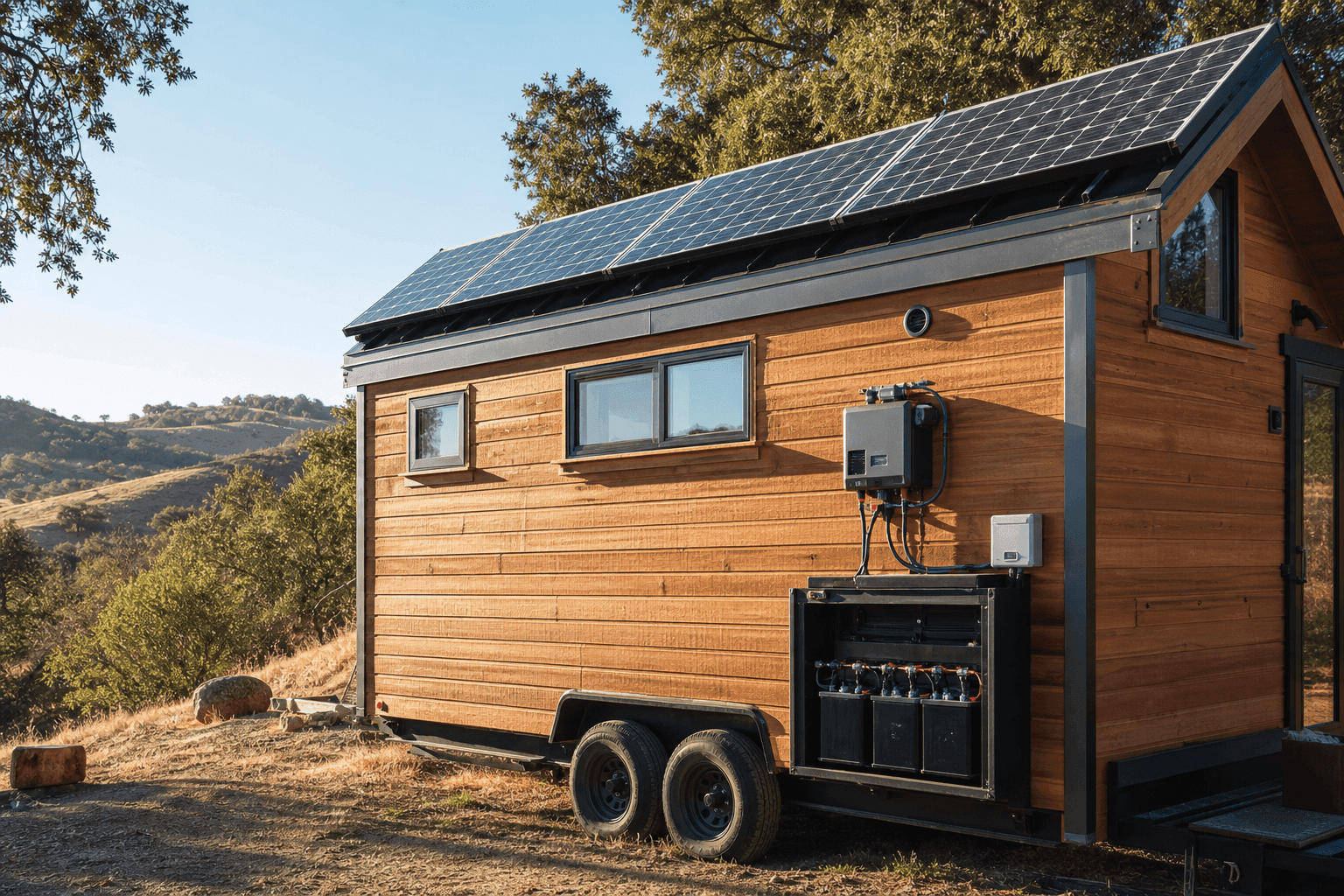
Most tiny house roofs accommodate 4-6 residential solar panels (1,200-2,400 watts total). Modern panels produce 300-450 watts each with improved low-light performance.
Battery Storage Solutions
Lithium batteries dominate the tiny house market in 2026 due to superior energy density, longer lifespan, and zero maintenance compared to lead-acid options. See our complete battery storage guide for detailed product comparisons.
Charge Controllers and Inverters
These components manage power flow and convert DC solar power to usable AC electricity. Quality matters for system efficiency and lifespan. Browse our inverter and charger guide for top-rated options.
The 30% federal residential solar tax credit ended for systems installed after December 31, 2025, so check state and utility incentives instead. Use our solar calculator to estimate system size and costs for your location.
Hybrid Power and Generator Backups
Pure solar systems work beautifully in sunny climates but struggle during extended cloudy periods. Hybrid setups combining solar with backup generators or propane provide reliability without massive battery banks.
Generator Backup Options
Generators provide emergency power during extended cloudy weather or high-demand periods. Modern inverter generators run quietly and efficiently.
Propane Hybrid Systems
Using propane for heating, cooking, and water heating reduces electrical loads by 50-70%, allowing smaller solar and battery systems. A 100-pound propane tank ($50 refill) lasts 2-4 weeks for typical tiny house heating and cooking needs. This strategy saves $3,000-$8,000 on solar equipment while maintaining comfort.
Wind Power Considerations
Small wind turbines (400-1,000W) complement solar in windy locations but rarely work as standalone solutions. Most tiny house rooftops lack adequate mounting for turbines. Ground-mounted systems cost $1,500-$4,000 and require consistent 10+ mph winds to justify the investment. Solar remains more practical for most locations.
Explore our off-grid living hub for more information on sustainable systems. Check off-grid accessories for specific product recommendations.
Off-Grid Electrical Safety Tips
Off-grid electrical systems require proper design and installation to prevent fires, shocks, and equipment damage. Follow these critical safety guidelines.
- Hire Licensed Electricians: DIY installation saves money but mistakes risk fires or electrocution. Licensed electricians ensure code compliance and proper grounding. Most jurisdictions require permits and inspections for solar installations.
- Proper Wire Sizing: Undersized wires overheat and cause fires. Follow National Electrical Code guidelines for wire gauge based on amperage and distance. Use marine-grade wire for mobile tiny houses.
- Overcurrent Protection: Install appropriate fuses or breakers between batteries, charge controllers, and inverters. These prevent fires from short circuits or overloads. Use DC-rated breakers for solar circuits.
- Battery Safety: Lithium batteries require battery management systems (BMS) to prevent overcharging and thermal runaway. Install in ventilated areas away from living spaces. Lead-acid batteries produce explosive hydrogen gas and need external venting.
- Grounding and Bonding: Proper grounding protects against lightning strikes and equipment faults. Tiny houses on wheels need additional bonding between the chassis and electrical system. Ground-mounted solar arrays require grounding rods.
Never bypass safety features to save money. Proper installation costs more initially but prevents catastrophic failures. Review the Solar America Board for Codes and Standards for current best practices.
Best Setups for Cold or Cloudy Regions
Off-grid living in northern climates or cloudy regions requires larger systems and careful planning. Reduced solar production and increased heating demands strain systems designed for sunny weather.
Oversize Your Solar Array
Winter sun produces 50-70% less power than summer in northern latitudes. Cloudy regions see 30-50% reduced output. Size your array for worst-case scenarios—install 2-3x the capacity you'd need in sunny climates. A tiny house needing 15 kWh daily should install 3,000-4,000 watts of panels in cloudy regions versus 1,500-2,000 watts in sunny areas.
Increase Battery Storage
Plan for 4-7 days of backup rather than 2-3 days. Winter storms and cloudy spells last longer. For 15 kWh daily usage, install 60-100 kWh storage in cold climates. This costs significantly more but prevents power outages during critical heating periods.
Use Propane for Heating
Electric heat pumps work well in moderate climates but struggle below 20°F. Propane heaters provide reliable warmth without draining batteries. A 100-pound propane tank ($50 refill) heats a well-insulated tiny house for 7-14 days in winter. This hybrid approach reduces solar requirements by 40-60%.
Cold-Weather Battery Management
Lithium batteries lose efficiency below 32°F and shouldn't charge below freezing without heating pads. Install batteries in heated spaces or use battery heaters. Lead-acid batteries perform better in cold but still lose 20-30% capacity. Budget for larger capacity to compensate.
Check our financing guide for options to fund larger systems.
Frequently Asked Questions
Final Thoughts and Cost Tools
Off-grid power systems have become increasingly practical and affordable in 2026. Modern lithium batteries, efficient solar panels, and integrated power systems make it possible to live comfortably without grid connection. Start by measuring your actual power usage, then size your system for 1.5x that amount to handle inefficiencies and weather variability.
Most tiny houses do well with 1,200-2,000 watts of solar panels and 20-30 kWh of lithium battery storage. Complete systems cost $5,000-$20,000 depending on capacity and installation complexity. The 30% federal residential solar credit ended after 2025, so check state and utility incentives before you buy.
Hybrid approaches combining solar with propane for heating and cooking provide the best reliability at the lowest cost. Generator backup ensures power during extended cloudy periods. Work with licensed electricians for installation to ensure safety and code compliance.
Use our solar calculator to estimate system requirements for your location. Check our comprehensive cost calculator to budget for your complete tiny house including power systems. Explore grant opportunities and financing options to fund your off-grid dream.