Tiny House Insurance When Selling: What You Need Before You List
Introduction
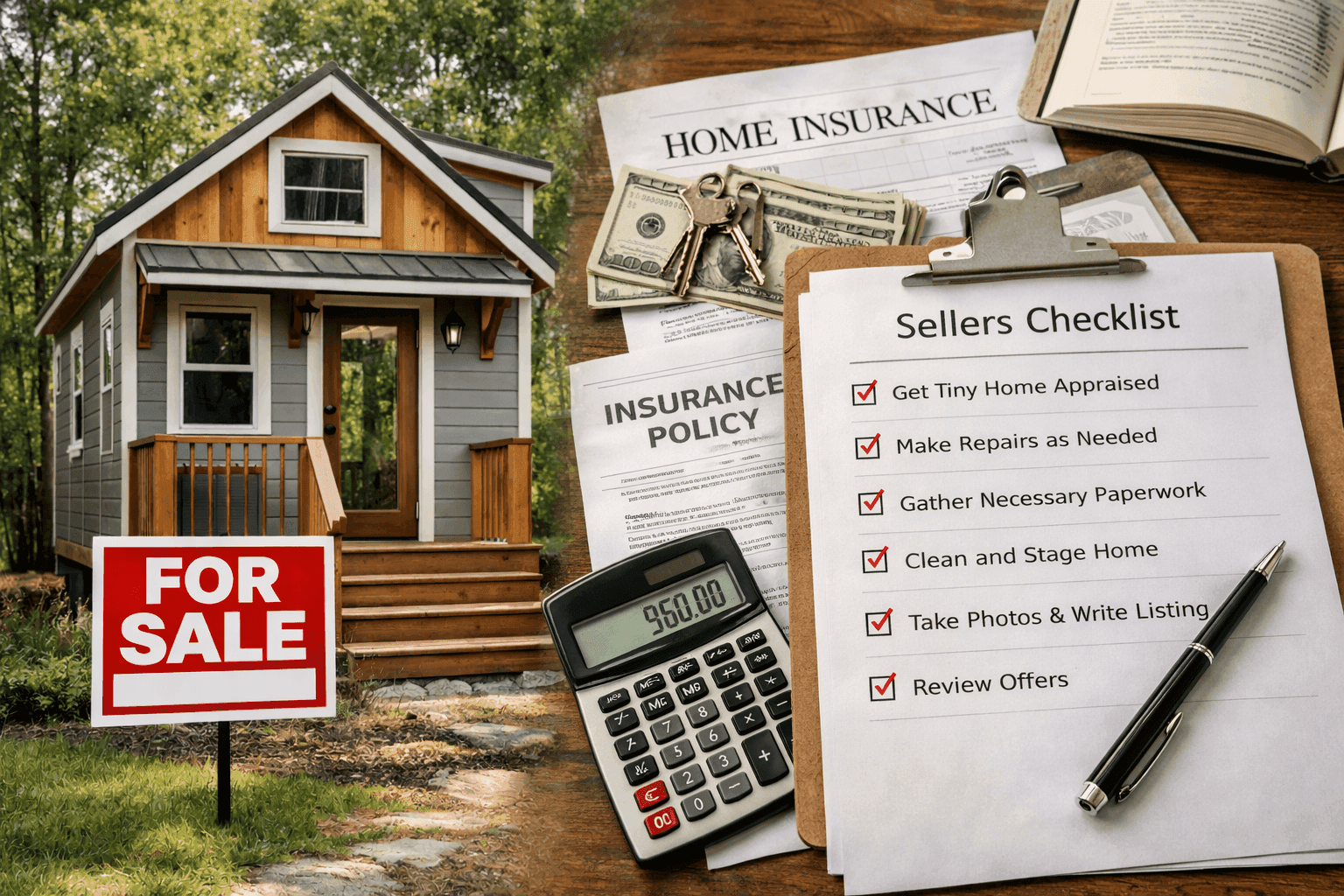
Selling a tiny house is not only about photos and price. Insurance matters too.
A clean insurance setup can make buyers feel safer, speed up closing, and reduce last minute surprises. A messy insurance situation can delay the sale, complicate transport, or leave you exposed during showings.
This guide explains how tiny house insurance usually works during a sale, what documents buyers often ask for, and how to avoid coverage gaps when your home changes hands.
Important Note
Insurance rules and availability vary by state and by carrier. Use this guide to get organized, then confirm details with your insurance agent or provider.
Why Insurance Matters More When You Are Selling
When you list a tiny house, your risk profile changes. Even if you have not moved the home in years, the sale process can add new risks. Insurance is one of the costs involved when selling that many sellers overlook.
1) People Will Tour Your Home
More visitors means more chances for accidents, damage, or liability claims. Liability coverage is one of the most overlooked parts of selling.
2) You Might Move the Home
Many tiny houses are moved to deliver to a buyer or to a staging location. Not every policy covers transport by default.
3) Buyers May Need Proof of Insurance
If the buyer is financing, a lender may require insurance before funds are released. Even cash buyers often want to see that the home can be insured.
Step 1: Identify What Type of Tiny Home You Are Selling
Before you do anything else, classify the home. Insurance companies price and approve coverage based on what the home "is" in their system.
Tiny House on Wheels (THOW)
A THOW may be treated like an RV or a manufactured style unit depending on size, certification, and use. Some owners end up with RV style coverage if the unit meets RV standards and is registered appropriately.
Tiny House on a Foundation
A tiny house permanently installed on land is more likely to fit into homeowners style coverage, but it still depends on zoning, permits, and whether it is a primary residence or not.
Tiny Home Used as an ADU
If your tiny home is legally an accessory dwelling unit, it may be insurable as a secondary structure in some setups. Availability varies by carrier and local rules.
Why '400 Square Feet' Comes Up So Often
Step 2: Know the Main Insurance Options
There is no single "one policy fits all" tiny home policy. Most people end up in one of these buckets.
Option A: Homeowners Insurance
This is the standard style policy used for traditional houses. A tiny home may have a better chance of qualifying if it is on a permanent foundation and is zoned properly.
Best for: Foundation builds that are legally permitted and used like a normal dwelling.
Watch out for: Minimum size rules, local permitting, and whether the home is classified as a legal residence.
Option B: Manufactured or Mobile Home Insurance
Some tiny homes fit better here, especially if the structure matches manufactured style criteria used by insurers.
Best for: Park model style builds or tiny homes that fit manufactured categories.
Watch out for: Coverage during transit may be limited unless you add transport coverage.
Option C: RV Insurance (for THOW)
If your tiny house is on wheels, some owners pursue RV coverage. One common gatekeeper is whether it qualifies under RV standards and inspection or certification programs. The RV Industry Association (RVIA) runs an inspection and certification program for RV manufacturers, and RVIA certification is often referenced in RV compliance conversations.
Best for: Tiny houses on wheels that truly function like RVs and meet RV requirements.
Watch out for: Full time residency rules, parking legality, and what the policy does and does not cover when the unit is used as a primary home.
Option D: Specialty Tiny Home Insurance
Some insurers offer specialty coverage designed for tiny homes, especially when the home does not fit cleanly into homeowners, manufactured, or RV categories. Availability is very state dependent.
Best for: Unusual builds, mixed use situations, or when standard carriers decline.
Watch out for: Cost, exclusions, and whether transport is included.
Option E: Dwelling Fire or Landlord Coverage
If your tiny house is a rental, seasonal unit, or second home, insurers sometimes steer owners toward policies designed for non owner occupied dwellings.
Best for: Tiny homes used as rentals or not lived in full time.
Watch out for: These policies may have limited personal property coverage, and liability terms vary.
Option F: Builder's Risk (Under Construction)
Builder's risk coverage can help protect the build phase, but it usually ends when construction is complete and the home is occupied.
Best for: New builds you plan to sell once finished.
Watch out for: Do not assume builder's risk covers showings or delivery after completion.
Step 3: What to Do With Insurance During the Sale
Here is the cleanest way to think about it: keep coverage active until responsibility clearly transfers.
Phase 1: Before You List
Confirm your current policy is active and paid. Ask your insurer if your policy covers visitors during showings. If the tiny house is on wheels, ask if your policy covers theft of the unit itself or only contents. Create a simple file with documents buyers may request.
Phase 2: While You Are Showing the Home
During showings you care most about liability coverage if someone gets hurt, property coverage if something is damaged or stolen, and contents coverage if you are selling it furnished.
Tiny homes can be more vulnerable to weather and storms, and a policy is meant to protect you financially when unexpected events happen.
Phase 3: When the Sale Is Pending
At this stage, keep your policy active unless your insurer tells you otherwise. If the home will be moved, ask about trip, transport, or in transit coverage. If the buyer wants proof of insurability, ask your agent for a coverage summary or declarations page.
Phase 4: Delivery Day or Transfer Day
This is where sellers get burned. Your goal is to avoid a gap where you canceled too early but you still own the home, or where the buyer thinks they are covered but they are not.
A practical approach is to keep your policy active through transfer, have the buyer confirm coverage start time for their policy, and put the agreed handoff moment in writing through a bill of sale, contract, or closing documents.
What Buyers Commonly Ask For
Not every buyer will ask, but prepared sellers close faster.
Insurance and Ownership
Declarations page or proof of active coverage. Any claims history you are aware of, shared honestly.
Build and Compliance Documents
Builder invoice or spec sheet, trailer details if on wheels, receipts for major upgrades, and any inspection reports.
If the Home Is on Wheels
VIN or title paperwork if applicable, plus weight and dimensions since buyers need this for towing and placement planning.
Cost: How Much Does Tiny House Insurance Usually Cost?
There is no single average that applies to everyone because the price depends on whether the home is on wheels or permanent, where it is located, build quality and certification, how it is used (primary residence, rental, travel unit, or seasonal), and your chosen deductible and coverage limits.
One mainstream source notes tiny home costs can range widely, and tiny homes can sometimes be much cheaper than traditional houses, but pricing varies based on size and features.
Seller Tip
Tiny House Insurance Checklist for Sellers
Use this list before you publish your listing.
Policy Check
- Confirm policy type matches your tiny home (foundation, wheels, ADU, rental)
- Confirm liability coverage is included and limits are reasonable
- Confirm coverage is active during showings
- Ask if transport is covered and what conditions apply
Paperwork and Proof
- Save declarations page and insurer contact info
- Gather build receipts and upgrade receipts
- Keep trailer or title documents organized (THOW)
Listing Language That Helps
In your listing description, add a simple line like:
"Insured and maintained. Documentation available for serious buyers."
Do not promise that a buyer will qualify for the same policy. Instead say:
"Buyer should confirm coverage options with their insurer based on intended use and location."
That keeps you factual and safe.
Common Mistakes to Avoid
Canceling Insurance Too Early
This is the biggest seller mistake. If something happens before transfer is complete, you may be unprotected.
Assuming "RV Insurance" Automatically Applies
Some THOW units do not meet RV criteria. Always confirm classification with an agent.
Forgetting About Liability During Tours
People step off decks, miss loft ladders, trip over steps. Liability matters.
Not Asking About Transport Coverage
Delivery is when losses happen. If the home moves, confirm coverage for that move.
Final Advice
If you want the smoothest sale:
- 1.Classify the home correctly: Know whether it fits homeowners, RV, manufactured, or specialty coverage
- 2.Confirm liability and transport coverage: These are the two biggest gaps during a sale
- 3.Keep insurance active until transfer is complete: Never cancel early
- 4.Hand buyers a clean documentation packet: Declarations page, build receipts, title documents
Then focus on what sells tiny houses best: great photos, clear specs, and honest details. Learn more about the typical tiny house selling timeline to plan your sale effectively.